In this class, you will learn the fundamentals of electrical and electronic circuits
$160.00
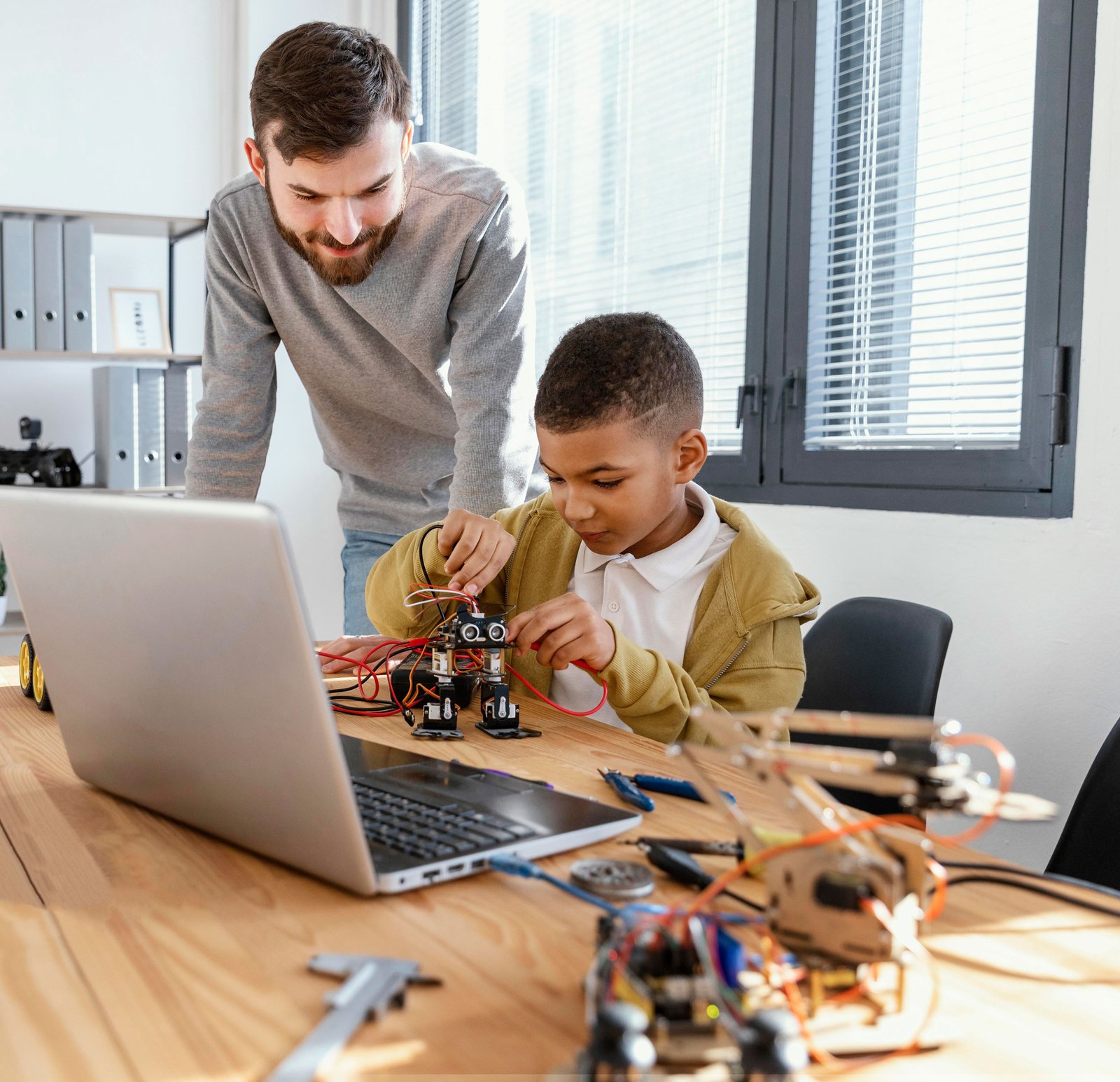
Through experimentation and hands-on learning, students discover how electronics work and how they are present in everyday life. Essential concepts such as current, voltage, circuits, and electronic components are introduced in a clear and accessible way.
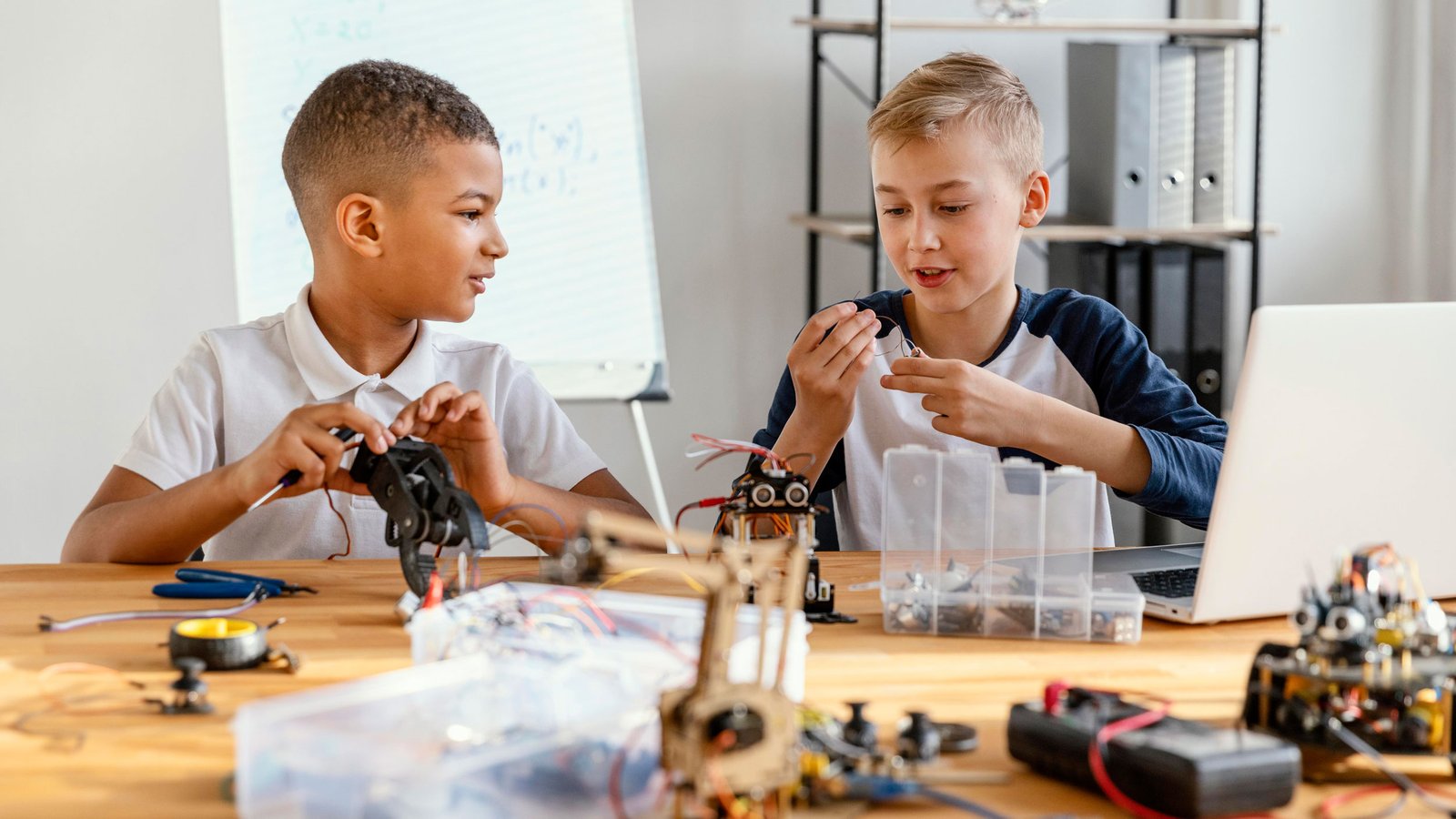
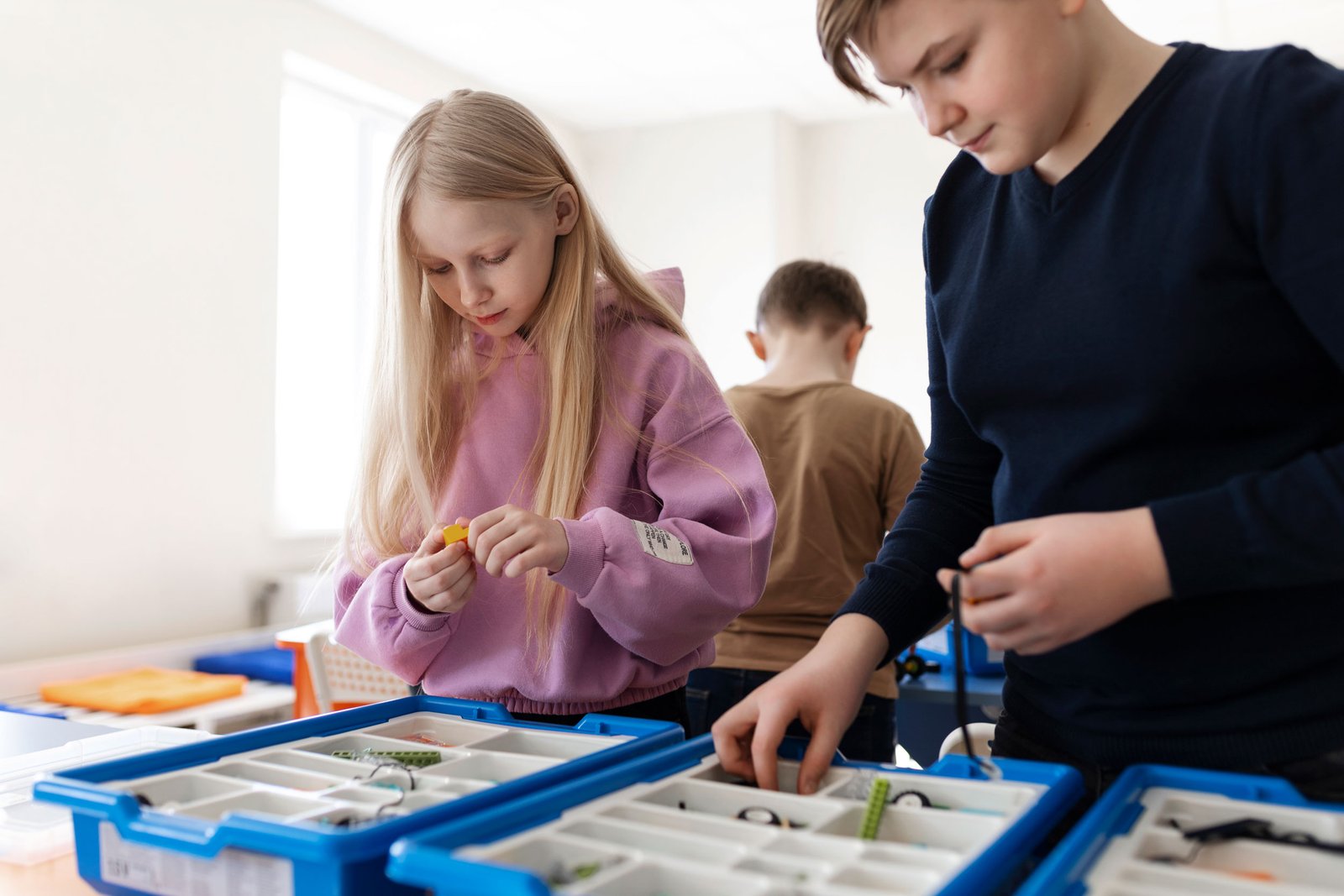
During the class, students work on practical activities that include building basic circuits, using a breadboard, and identifying resistors, LEDs, sensors, switches, and motors, as well as small control and automation projects.
This class strengthens logical thinking, problem-solving skills, and scientific curiosity, motivating students to explore, create, and understand the technology around them.
Albums with photos and videos from classes, prototypes and competitions. Click an album to open the gallery.
In this class, students learn to work with real electronic components such as LED lights, wires, and soldering tools. They develop practical skills by building simple circuits, understanding how electricity works, and solving technical problems. It is a creative and educational experience that encourages curiosity, focus, and logical thinking.
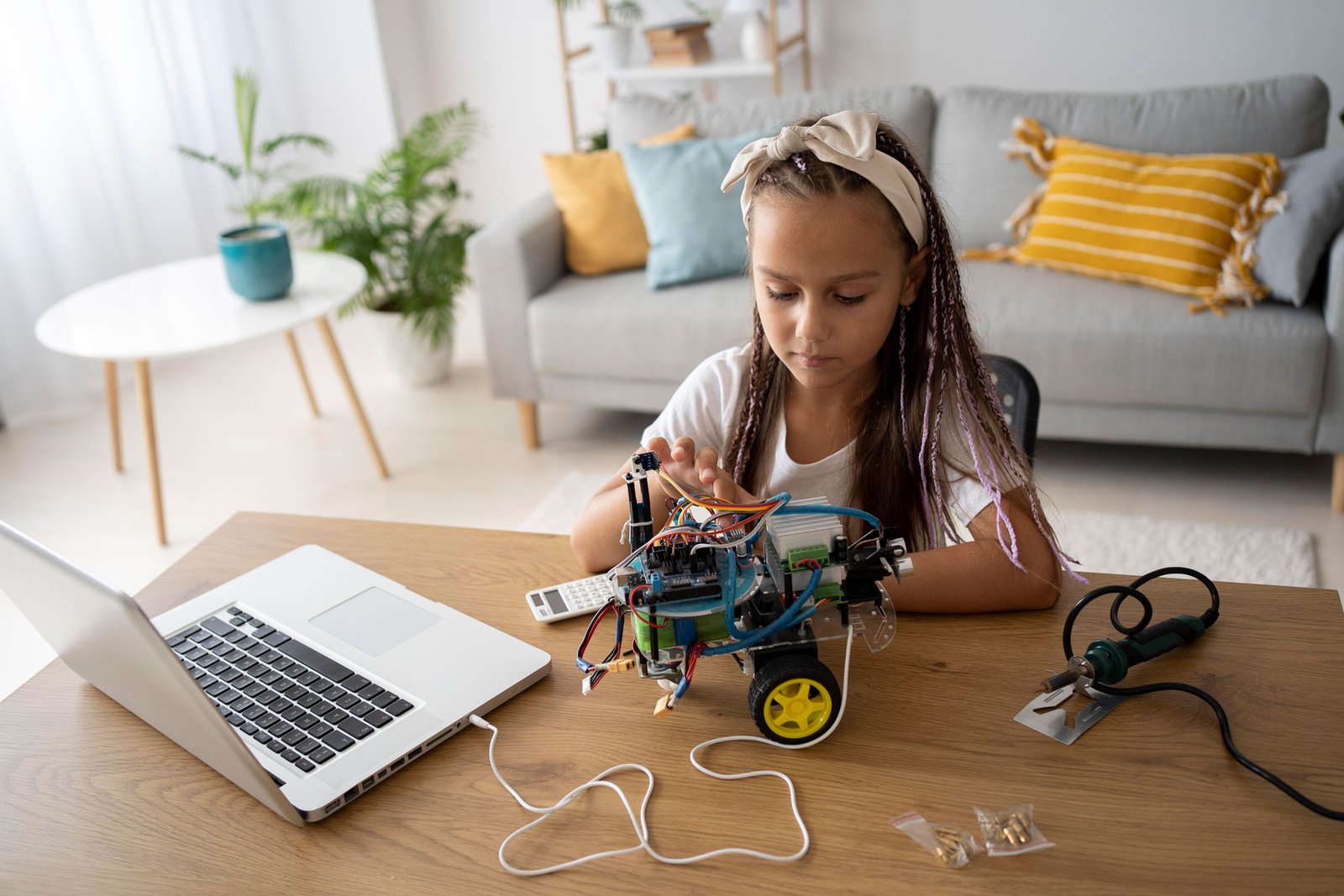
Students explore electronics using real components and microcontrollers such as Arduino. They learn how to connect circuits, program simple functions, and understand how electronic systems work. Through hands-on practice with kits, sensors, and LED displays, students develop creativity, problem-solving skills, and a deeper understanding of technology.
Students learn digital illustration, creative design, and professional graphic tools.
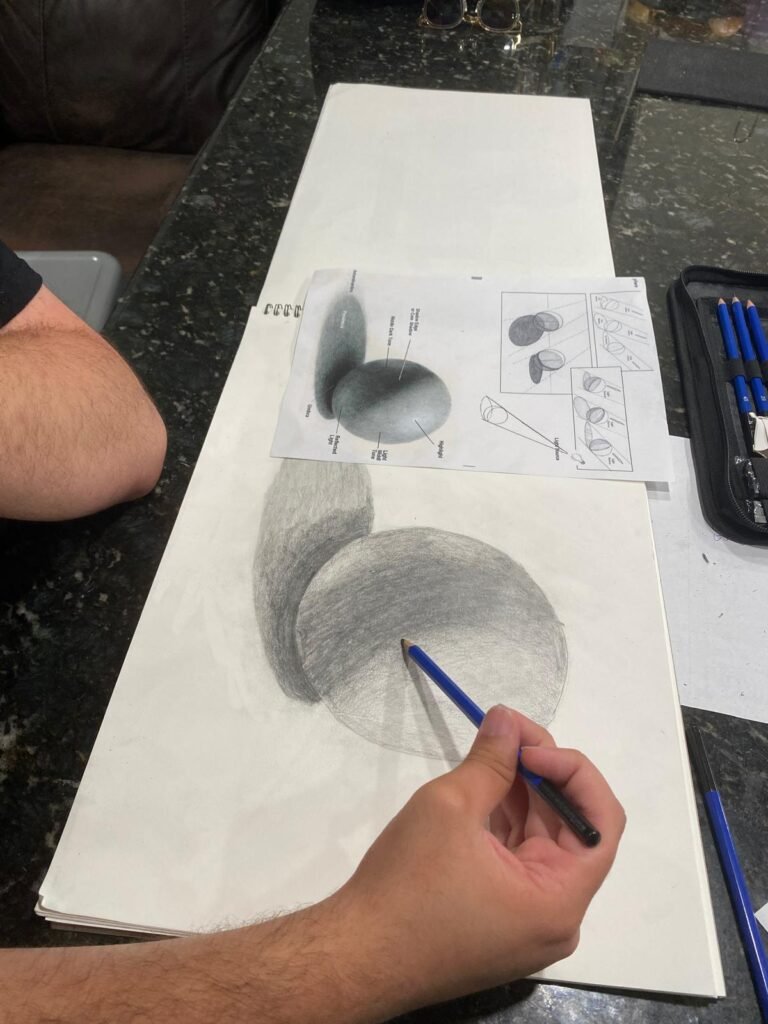
In this art class, the student works on pencil drawing focused on volume and light. By observing a reference model, the student applies gradual shading to represent a sphere, carefully developing the transitions between highlights, mid-tones, and cast shadows. The pencil is used with varying pressure to create depth and realism, while paying attention to form, light direction, and contrast. This activity strengthens observation skills, line control, and understanding of volume in simple shapes.
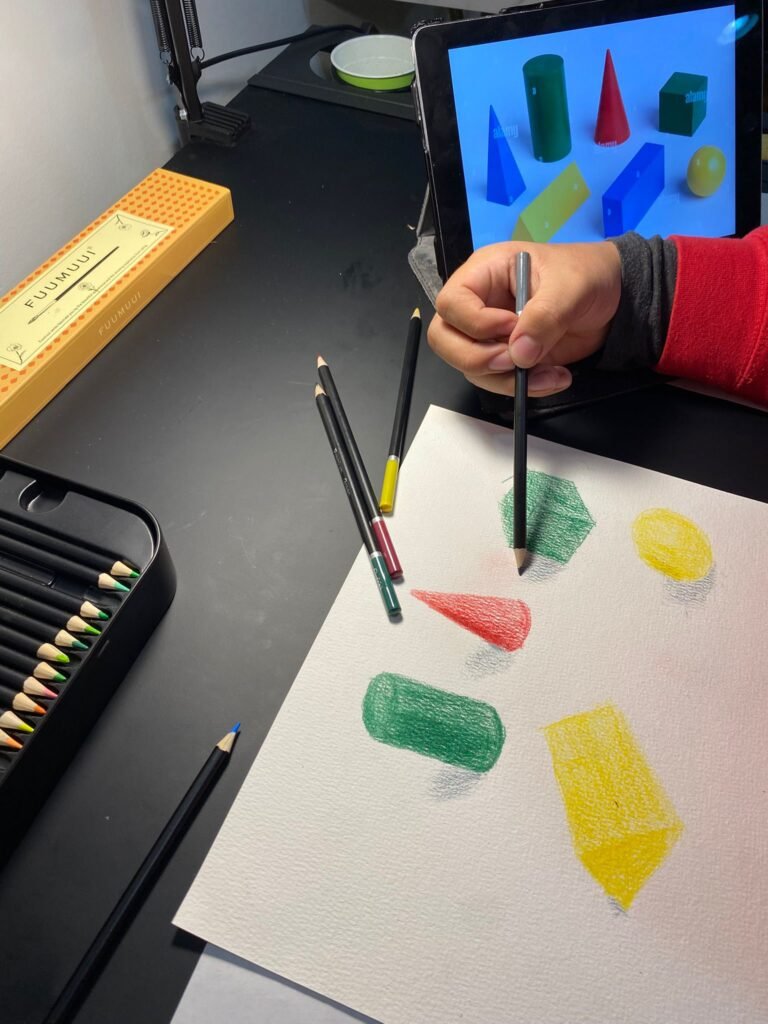
In this art class, the student actively develops drawing skills by working with colored pencils and traditional sketching tools. The student practices shading, texture, and color blending while observing natural forms and translating them onto paper. Through hands-on exercises, the student strengthens fine motor skills, visual perception, and creative expression, learning to apply artistic techniques with focus and attention to detail.